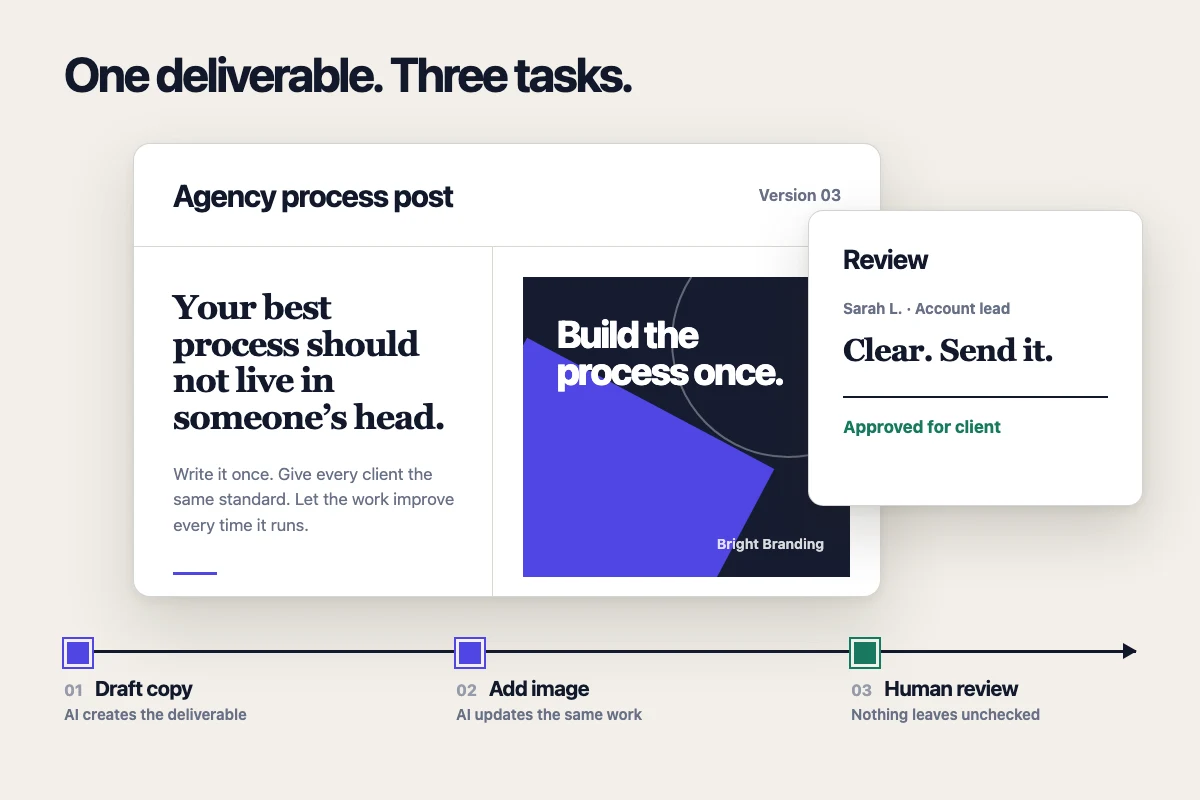
Reusable Blueprints for Every Deliverable
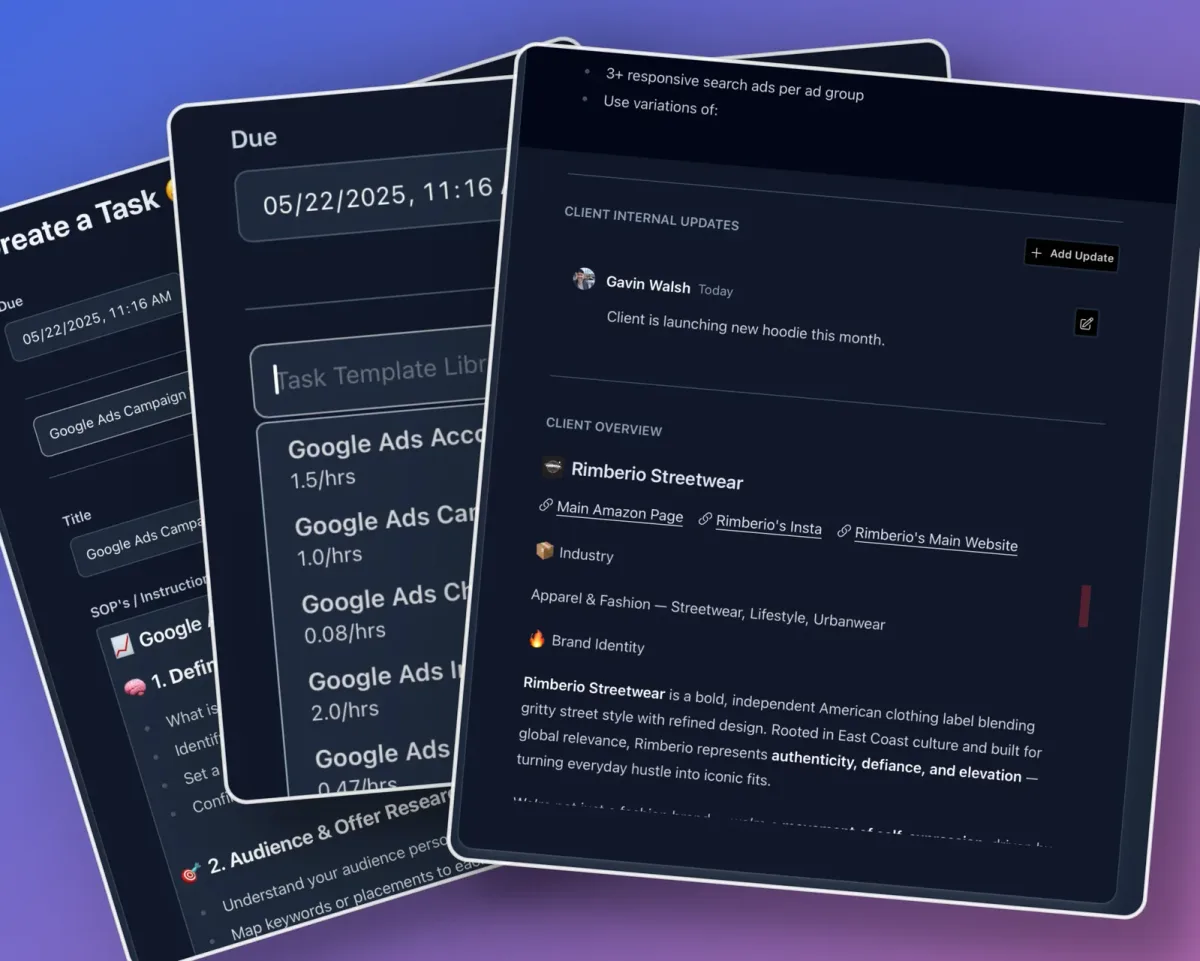
Task Templates live in Settings > Templates, organized into groups like “Monthly Reporting”, “SEO”, or “Campaign Builds”. Each template includes a name, Lifty Prompt (AI instructions), SOPs / Details (human instructions), estimated minutes, tags, and visibility settings. The task templates how-to walks through the full setup.
Human Instructions With Rich Text
The SOPs / Details field supports rich text: embed Loom videos, YouTube videos, Scribes, checklists, and formatted text. Your team gets clear, visual instructions for every task.
AI Instructions With Context
The Lifty Prompt tells the AI what to do. Use @mentions to reference other templates and teammates. When the AI runs a task built from this template, it combines your prompt with the client’s description, brand config, and history to produce relevant output.
Tools for AI
Limit which tools the AI can use per template. This keeps the autocompleter focused on exactly the actions you want for each task type.
Prefilled Task Creation
Creating a task from a template prefills every field automatically: instructions, time estimate, tags, autocomplete toggle, and visibility. Adjust per client as needed.
After-Completion Chaining
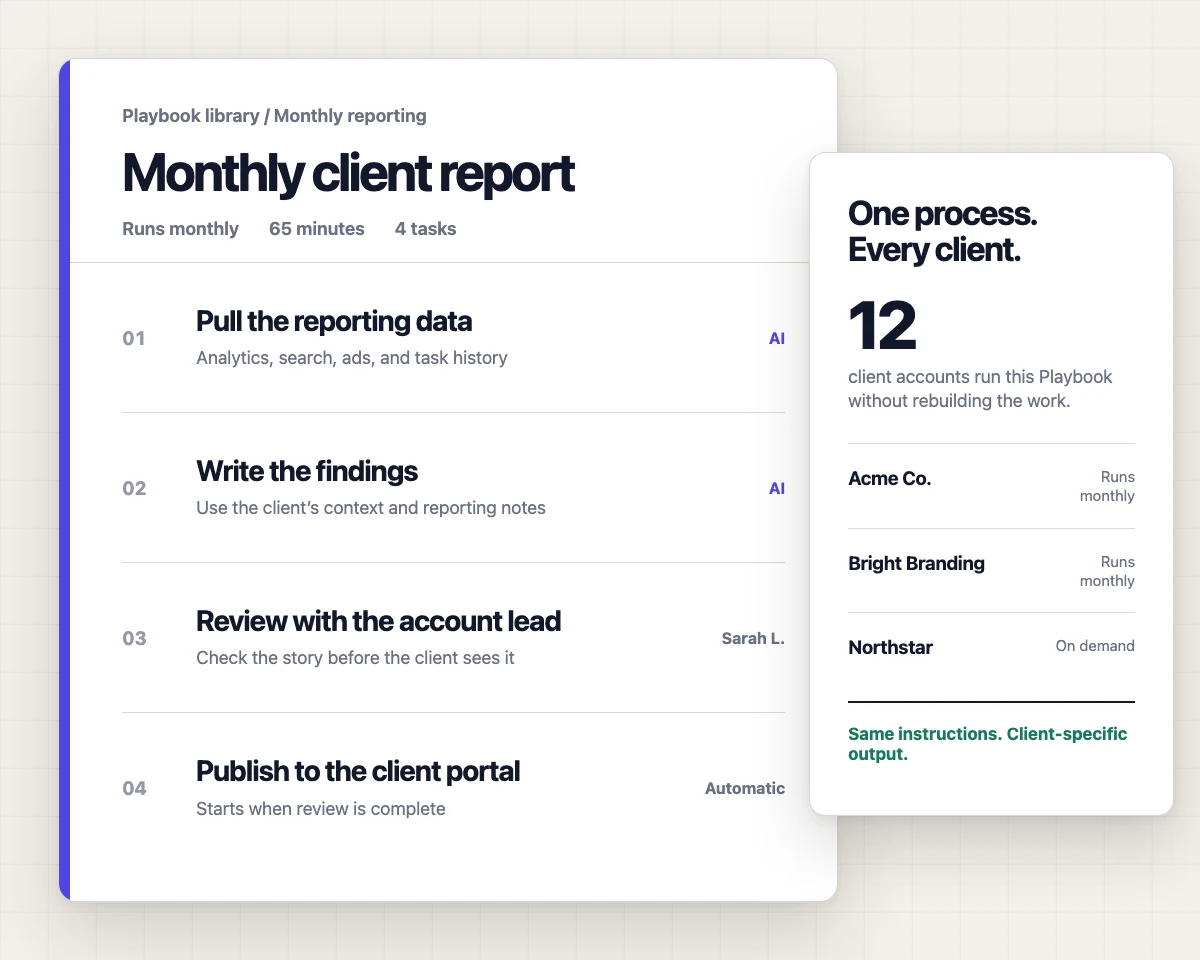
Set a Lifty Prompt with Run on complete on a template to trigger follow-up tasks automatically. Completing one task kicks off the next in the chain. Every AI Playbook uses this pattern to chain multiple tasks together.